


Paper 101 - Scoring, Folding and Paper Grain
Scoring, Folding and Paper Grain
Learning how to find the grain direction in your paper and properly scoring your paper is key to creating beautiful and professional looking pieces with crisp, clean fold lines!
What is paper "grain"?
Paper is made up of tiny grains of fiber that align in the same direction during the manufacturing process.
- The many small fibers are pressed together.
- The paper grain is the direction in which most of the paper fibers run.
- The grain runs in one direction on a folio parent sheet, which is the large sheet produced by paper mills that smaller sheet sizes are cut down from.
- Depending on how the parent sheet is cut down, you will end up with paper that is either long grain, where the grain is in line with the length of the sheet, or short grain, where the grain runs in line with the width of the sheet.
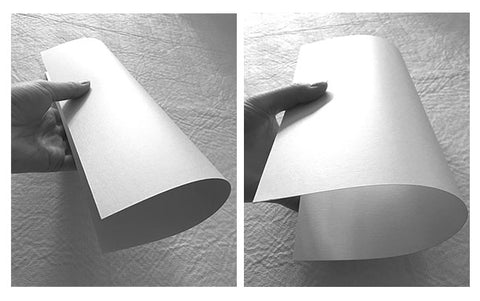
- Test the paper to find the grain by bending the paper part way, as if to fold it. Do this in each direction.
- There is less resistance when the fold line runs with the grain, also known as "short grain"

| In the above illustration the grain runs from top to bottom and bends with less resistance from side to side, folding with the grain. More resistance when folding top to bottom, against the grain. | In the above illustration the grain runs from side to side and bends with less resistance from top to bottom, folding with the grain. More resistance when folding side to side, against the grain. |
| Note: If your sheet is square, you will still have grain running in one direction, so there will be a long and short grain on your sheet as well. |
With the grain vs. against the grain
Scoring Tips - get a clean fold!
- Makes a depression in the paper where you want the fold to be
- Allows you to cleanly fold along the grain as well as against the grain
- Makes a professional-looking and clean fold when using a heavier paper or cardstock
- Prevents the paper from “cracking” along the fold line
- Can be done with a scoring board, the back of a knife and a ruler, a dotting tool and a ruler, or with a tool called a “bone folder"
- Be sure to use a dull object to make the score. The score should not puncture or break the fibers on the surface of your paper, but simply make an impression
- The heavier the paper, the deeper the depression will need to be.


Score your paper to score points on your paper projects!
Paper Grain and Printing
Another important consideration for paper grain is printing. Cardstock paper that feeds into the printer against the grain may result in difficulty feeding through the printer and paper jams, especially if the paper path is not a straight feed. This is because the paper is moving against the grain, and as illustrated in the image above, it is not easily bending around the paper rollers.
If you are experiencing issues printing on heavier cardstock, be sure your printer can handle the GSM weight of your cardstock. If it can, set the correct paper type for thick or heavy cardstock and make sure the paper is feeding with the grain. If it is feeding against the grain, adjust your document orientation and turn the paper to feed with the grain. Sometiems this works.